
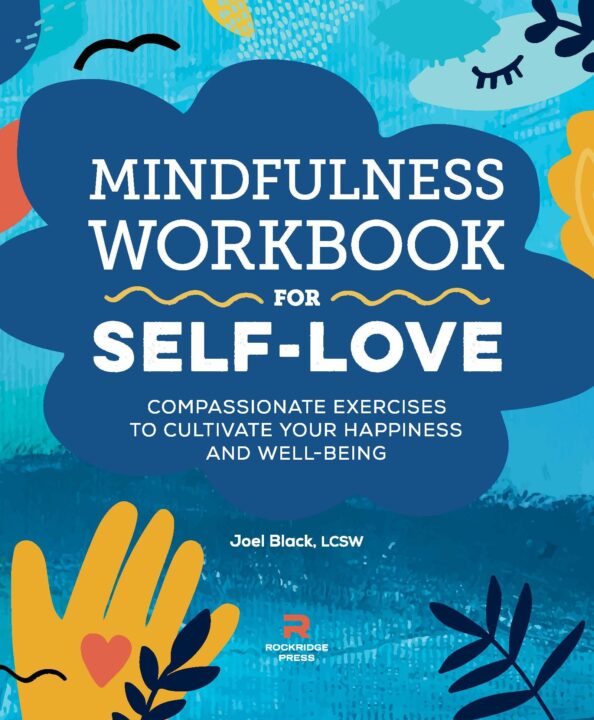
Hi! My name is Joel Black. I am a social worker and psychotherapist, and I own a business called Redemption Counseling. I wrote a book called Mindfulness Workbook for Self-Love. I’m going to talk about topics in the book to give a little more context, perhaps going a little deeper. This post covers Chapter One: Understanding Self-Love.
The Challenge of Self-Love: Why It’s So Difficult
The reason I wrote this book is because I’ve noticed it’s really easy to get down on ourselves. We all make mistakes, and it’s natural to feel bad after we make them. Most of the time, we might get motivated after that and decide, “Alright, let’s go back and try it again.” Unfortunately, sometimes this can turn into harsh self-criticism. If this persists, it can develop into negative beliefs and feelings about who we are and our self-worth.
The outside world also constantly sends us unhelpful messages. It tells us that our value is tied to external things like wealth, possessions, popularity, good looks, and status. This constant comparison inevitably leads to discouragement because we’re always going to find someone better than us at something. If we tie our value to that, it’s not good.
Even worse, we sometimes internalize a negative view of ourselves due to messages we received from people we were supposed to love and trust. Perhaps some adults in our lives growing up used negativity to try to motivate us, or maybe they weren’t taking the best care of themselves, so their unhealthy habits led to negativity and harsh criticism. When we’re growing up and trying to figure out the world, we can really take that on, believe it, and internalize it. These beliefs can still show up years later. If the people raising us weren’t taking care of themselves, it would have been very difficult for them to model what a healthy self-image looks like. How could we learn if they weren’t modeling it for us?
Persistent negative thoughts about yourself can lead to a lot of serious mental health conditions, such as depression and anxiety. If it gets too serious, it can even lead to self-harming behavior or suicidal ideation—these are truly serious concerns. Therefore, developing and nurturing a sense of worth and value for yourself is profoundly important.

Defining Self-Love: Two Key Components
So, what do I mean by self-love? I break it down into two parts:
- A belief in your value and an appreciation of your worth and virtue. This is all “up here”—how you think about yourself and how you talk about yourself.
- Actively taking action to create happiness, joy, fulfillment, and peace within your life. This involves actively engaging in fulfilling activities, taking care of ourselves, and putting energy into the relationships that matter to us.
When we fully accept ourselves, flaws and all, we are able to make mistakes and respond to those mistakes with the feeling that “hey, this is a chance to get better”. Otherwise, we can open ourselves up to constant criticism and blaming ourselves after things don’t go as planned.
The Journey of Self-Love: Simple, But Not Always Easy
Self-love is simple, but not always easy. It’s simple in its execution; the process of doing it isn’t complex or difficult. However, it’s not easy because we have to keep doing it. Doing it at 9:00 a.m. doesn’t automatically mean we’ll do it at 9:00 p.m., for example. It’s a constant, moment-by-moment focus that we have to develop and sustain.
As I mentioned before, personal history plays a role. The things we’ve experienced throughout our lives up until now have an effect on our ability to think this way. Sometimes, we have to untangle beliefs that we may have developed over the years, which could have come from the way we’ve been motivated in our lives.
A lot of times, people try to motivate others with negativity, criticism, harshness, threats, or aggression, used in the hopes that “hey, that will motivate a person to do the right thing”. And sometimes that works. But if that happens too much, where it’s not balanced with positivity, encouragement, and a belief system that promotes self-worth, then some really detrimental beliefs can be developed. Those are hard to overcome because they become ingrained and then start operating in the background. What that causes is an automatic response to situations. So, in times where you make mistakes, or things don’t go exactly the way you want, the natural instinct may be to use the same type of harsh criticism and negativity that was used on you to motivate you.
These are the types of things we have to overcome. If it’s operating beneath our awareness, we have to put some extra effort into noticing it when it happens. That’s where the mindfulness piece comes in. Breaking that cycle may seem like an onerous task, but it can be broken. Awareness is the first step, and setting the intention to put effort and energy into this—saying “hey, this is important”—that’s where we’re going to start in this book.
How Self-Love Impacts Your Life
Having self-love for yourself can affect many parts of your life, including your levels of satisfaction, feelings of contentment, and fulfillment. Seeing yourself as worthy of having fulfilling experiences and positive relationships makes believing those things a lot more likely. It also gives you the motivation to put effort and energy into having those things.
Self-love particularly affects our closest relationships: family relationships, romantic relationships, and any type of relationship. Relationships work best when two people bring their solid selves into the relationship, knowing how to achieve their own fulfillment, regulate their emotions, and meet their needs. Then, the two people can decide what kind of compromises and trade-offs they are going to make for each other to make the relationship work. At the very least, they each have a foundation of self-regulation they can fall back on during difficult times. Conversely, if we’re looking for someone to fill in those gaps—someone to make us happy or make us whole—it typically and inevitably falls short. Bitterness, resentment, and disappointment can be the results of that. Therefore, a longing to love yourself is often what’s going on whenever you notice you’re not quite getting the results you want in those areas of your life.

Making Self-Love a Priority
You are the only one who knows all the reasons why working through this workbook would be good for you. But needless to say, it’s probably because there’s a lack of satisfaction or a lack of positive feelings you have about yourself, and you want different results in that area. So, good job on choosing to do some work there!
The good news is that increasing the amount of self-love you express will help reduce the amount of time you spend in self-doubt, criticism, and worry. All those things are draining on motivation. We have to get up every day and do our responsibilities, take care of the things we need to take care of. It all takes energy and willpower for us to be able to get up and do these things. The things that motivate us to do it are the benefits we get out of it. When we don’t feel good about ourselves, or feel down on ourselves, it kind of takes away from the amount of positivity we can get from doing these things. After a while, if the balance has tipped toward putting energy into things but not feeling good about it, our motivation can go down.
Conversely, when we feel good about ourselves, when we feel positive, and when we feel like we can have good experiences and good results out of life, then we’re more motivated. We’re more motivated to try new things, put extra effort into things, and take on things that seem a little challenging—but the payoff might be worth it. So, it starts inside, it starts with you, it starts with that belief that, first of all, you deserve to have some positivity in your life and feel good about yourself. You’re the type of person who deserves it and is capable of it. Hopefully, that positive feeling will lead to taking on more challenges and getting positive results from that, taking that good feeling you get and using it to go into the next challenge and the next.
This discouraging mental image of yourself, not being able to see yourself in a loving and positive way, naturally leads to beliefs where a person can feel they’re not even deserving of positive things. Getting this workbook and making a commitment to your mental health are good first steps, worthy of congratulations on your part.
I also want to give you reassurance that you do deserve love and positive regard for yourself. You also deserve to have time to make it a priority. We talk about this in a lot of different areas of life: making time to get to the gym, making time to cook food for yourself instead of eating out, making time to spend with family and friends. This is time to prioritize something else that’s really important for your well-being. I’m sure everybody has a long list of things to do today or any other day for other people, which is perfectly okay and encouraged. We have our employers or our businesses, families, friends, responsibilities, and obligations, and that’s all well and good. If we were not attending to those things, we’d feel even worse.
I’m just encouraging you to say, “Hey, part of this time in a day belongs to me—it belongs to things I need to do for myself, things that are important to me.” Being able to have that time, protect that time, and treat it as any other appointment you would make, is crucial. If you had an important doctor’s appointment, you would make sure you made it to that appointment. So, treat the really important things you do for yourself the same way.
When I started my business, I named it Redemption Counseling because I truly feel that way—that we’re not defined by the worst things we’ve done in life. And sometimes we’ve all made mistakes, some pretty bad mistakes, and we feel bad about them, as we should. What we shouldn’t do is make an identity out of a mistake we made. Hopefully, the bad feeling motivates us to make a repair, change behavior, and learn new things so that there’s less chance of it happening again. After that, that’s all we can do. Holding on to it, carrying it around, making it define us and who we are, that’s not helpful. After a while, you want to be motivated to fix mistakes and change behavior. We don’t want to be identified with the things we don’t like about ourselves, or mistakes we’ve made, times we haven’t lived up to our values, or times where we hurt another person, intentionally or unintentionally. We’re all going to do that throughout this journey. So hopefully, we can learn to change our behavior and forgive ourselves, which allows us to move on.
Setting Yourself Up for Success: Practical Steps
That being said, it’s important to set yourself up for success if you’re going to try this out. You’ll want to create time and space to be able to do it, and as I said, you’ll want to protect it. Treat it like an appointment: “Hey, this is time for me to sit down and work on this.” So, let everyone else in your environment know, “This is my time. I would appreciate fewer interruptions and distractions so I can work on this.”
We all know that’s easier said than done. Sometimes you have to get other people used to us using this time and protecting it. At first, they may test it, like, “Yeah, alright, well, you said you’re busy, but I’m still going to check in with you and ask you a couple of questions while you’re doing so.” You really want to make sure that if it’s important to you, you set aside time to do it.
And then, be gentle with yourself throughout this whole process. The whole idea is not to be harsh with ourselves and not to be discouraging and say negative things about ourselves. If we start something and it doesn’t quite go exactly as planned—we miss a day, or we’re not getting something, or we give in to some of the distractions that come up—we might start feeling bad about ourselves again, thinking, “Oh man, what’s wrong with me? I said I was going to do it, and I didn’t do it.” When I say “be gentle with ourselves,” I mean refraining from criticizing ourselves for making mistakes. See if we can just say, “Hey, alright, yesterday didn’t go well. I wasn’t able to get any time in. Let’s do the best job I can do today and let that go.”
Yes, you want to do the best job you can, and you also want to forgive and let go when things don’t work out great. Have some patience, be practical. All those things I listed before as important obligations in our life, they are important. Life is unpredictable, life happens at a fast pace, and things change all the time. So, having strict standards where you say, “Hey, I can’t possibly come off of this rigid regimen of doing things, or else things won’t be successful,” well, you’ll need some flexibility and adaptability.
Assessing Your Self-Esteem: The Workbook Quiz
Then, you’ll want to assess where you’re at with things when it’s time to get started. How are you really feeling about yourself? What types of things do you think or feel about yourself that contribute to or take away from your feeling of worth and love for yourself?
In the book, I’ve included a quiz that truly assesses some of where your thinking is at this time —just at this time, where you’re starting from, and where you want to work to. In school, if you remember, at the beginning of the year, they’ll have you take a pre-test. The teacher says, “Don’t worry, don’t worry, this isn’t counted, it doesn’t matter how good or bad you do.” But you still get really nervous about doing good or bad. This is a pre-test, and again, I’m telling you, don’t get nervous about doing good or bad; there are no right or wrong answers. In the book, you’ll read the question and just note how much you agree or disagree: strongly agree, agree, disagree, strongly disagree.
- On the whole, I am satisfied with myself.
- At times, I think I am no good at all.
- I feel that I have a number of good qualities.
- I am able to do things as well as most other people.
- I feel I do not have much to be proud of.
- I feel useless at times.
- I feel that I am a person of worth, at least on equal footing with others.
- I wish I could have more respect for myself.
- All in all, I am inclined to feel that I am a failure.
- I take a positive attitude toward myself.
In the book, there’s scoring for these questions. Different numbered questions are scored differently, so it’s not just a matter of adding up how many you agree or disagree with. Some get a certain score for strong agreement, some get a certain score for strong disagreement. So you’ll want to look in the book and score it accordingly, and that will give you a general idea of your current level of self-esteem. This is not an official diagnosis, nor is it any type of treatment you’re receiving—that would need to be done with your professional therapist or counselor. But what this can do is give you a general idea of where you’re at right now.
Conclusion: The Path to Fulfillment
This first chapter was just an introduction to discuss why you should read this book and do the workbook, what I’m trying to accomplish, and what I’m trying to address. Hopefully, you can think about some of the goals you have, where you’re coming from, and what you want to get out of this.
I want to offer encouragement and also point out that this takes work, effort, time, energy, and dedication—just like anything else that’s worthwhile. I believe this is worthwhile because this is truly the path to finding fulfillment in our lives. I think if you go out there and find the most fulfilled person in the world, they’re not going to be someone who never had a struggle in their life, never made a mistake, never did anything wrong, or felt hurt or pain. What you’ll find is a person, I’d imagine, who had a significant amount of those things and figured out how to keep bouncing back, how to keep bringing themselves back to some sort of positive and motivating belief system about themselves and the world around them.
This is what results when we start having a positive belief system about ourselves. There are going to be challenges, things we need to put work into, challenges we need to face, and problems we need to solve. That’s not going to stop as long as we’re breathing. We can still feel satisfied and fulfilled by the way we approach those, handle those, and what we do afterwards. In those struggles, we also develop the tools that we can use next time and the time after that. So, having a belief in ourselves—that we can do those things, that we are capable, and that we are deserving of the fulfillment and positivity that comes from that—is very, very important.
So, my encouragement to you is: keep going. Do the work piece by piece, take it slow, take your time, but also keep pushing. Keep pushing if you feel challenged, if you feel it’s difficult, or if your motivation goes up and down. Talk to people who are on your side and whom you trust. Review your motivations for doing this in the first place, and what types of things you believe could be different if you turn this around. Things like that can help keep you focused, keep you encouraged, and keep you on the right path. This covers Chapter One and why I felt it was important to include in this workbook.
Ready for Your Full Self-Love Journey?
Explore all the insights, exercises, and practices in the complete Mindfulness Workbook for Self-Love.